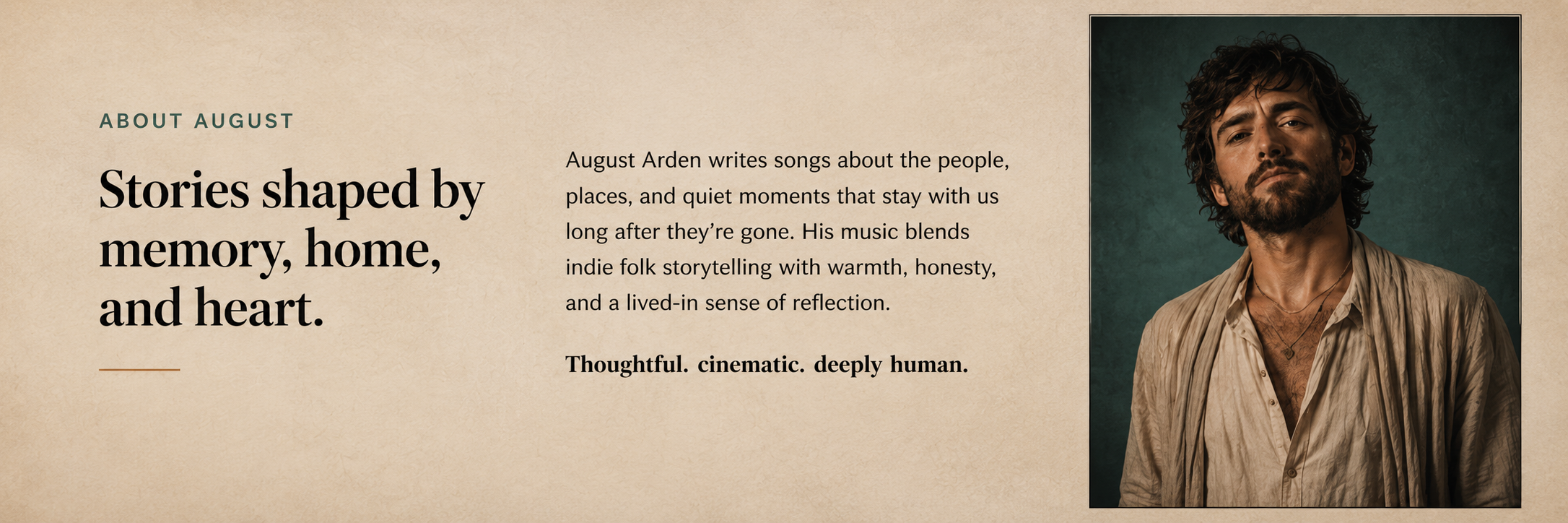
August Arden: The Stories We Keep, the Rooms That Remember

There is something immediately familiar about August Arden’s music—not because it sounds borrowed, but because it feels remembered.

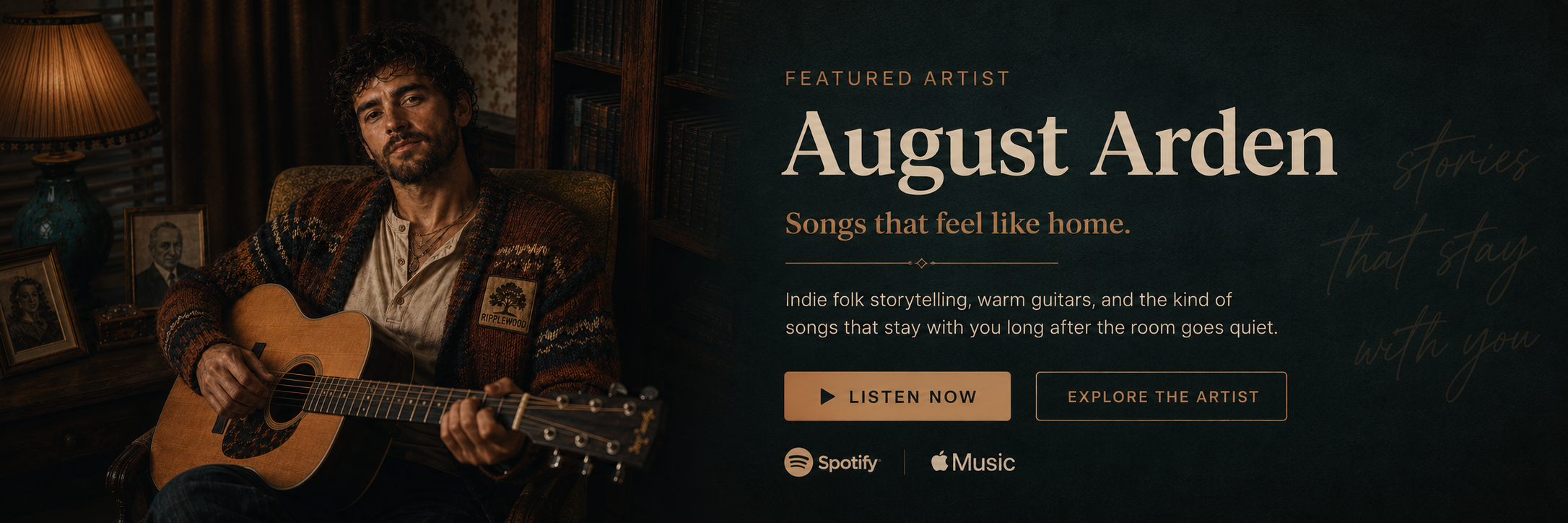
The Toronto-born singer-songwriter writes the kind of songs that seem to have existed quietly inside the listener long before the first chord begins. Built around acoustic guitar, warm piano, intimate vocals, and carefully layered harmonies, Arden’s work lives at the intersection of indie folk, classic songwriting, and cinematic pop. His music is reflective without becoming fragile, nostalgic without feeling trapped in the past, and deeply personal while remaining open enough for anyone to find their own story inside it.

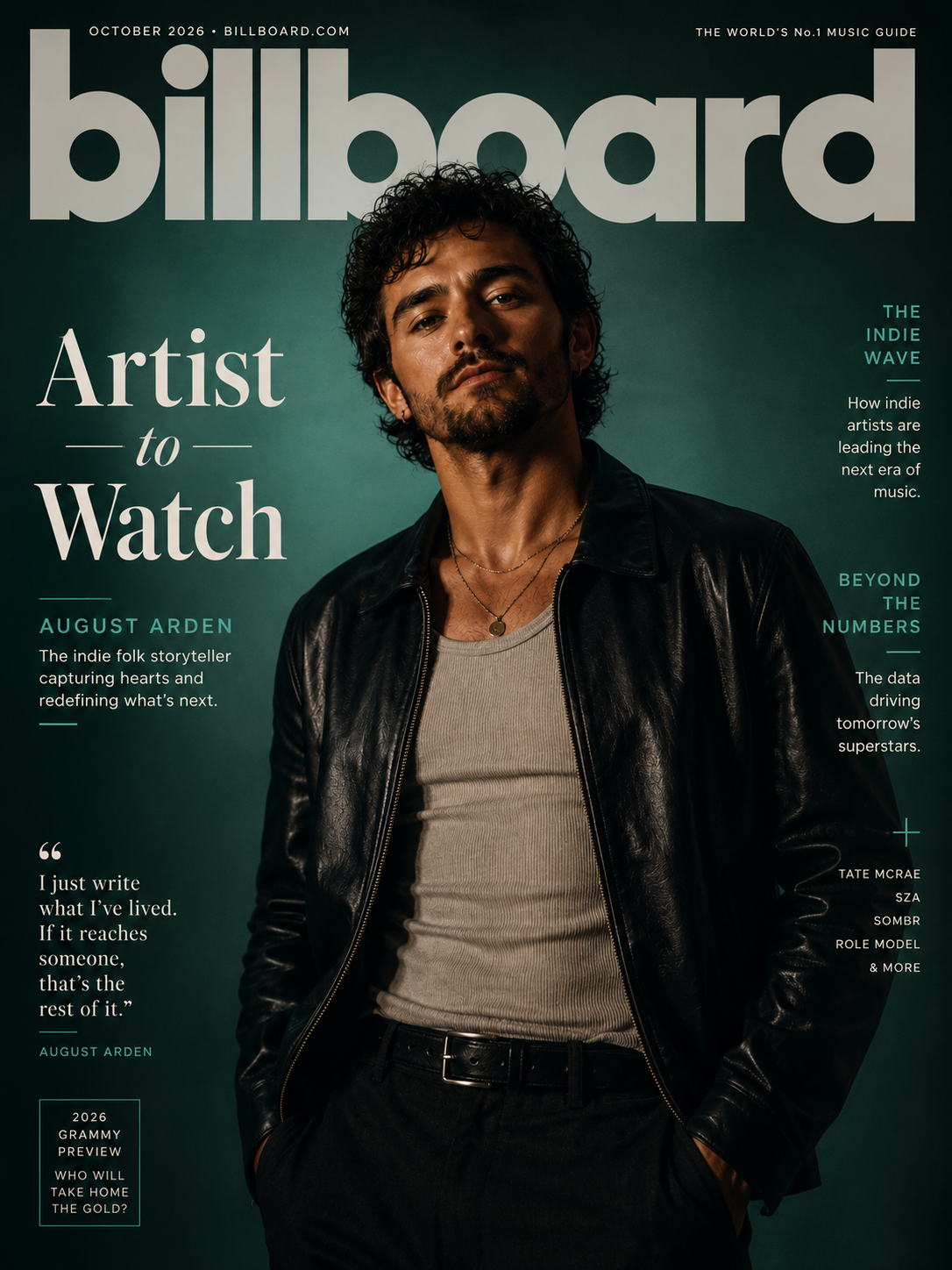
Now signed to a five-album deal with Next Era Media and managed by recording artist and creative executive Gabriel Antonio, Arden enters his debut era as one of indie folk’s most compelling new voices—a thoughtful, emotionally precise songwriter positioned to follow the path carved by artists such as Noah Kahan while building a world that is unmistakably his own.

Raised in Toronto, Arden grew up fascinated by the way a song could hold an entire lifetime within a few carefully chosen lines. He was drawn to storytellers who understood that melody and memory were inseparable. Paul Simon’s lyrical detail taught him how ordinary moments could become extraordinary. Lionel Richie’s instinct for timeless melody showed him that emotional honesty could also be universal. Outside of music, Arden cites Diane Keaton as a lasting creative influence—admiring her individuality, warmth, wit, and ability to make vulnerability feel elegant rather than guarded.

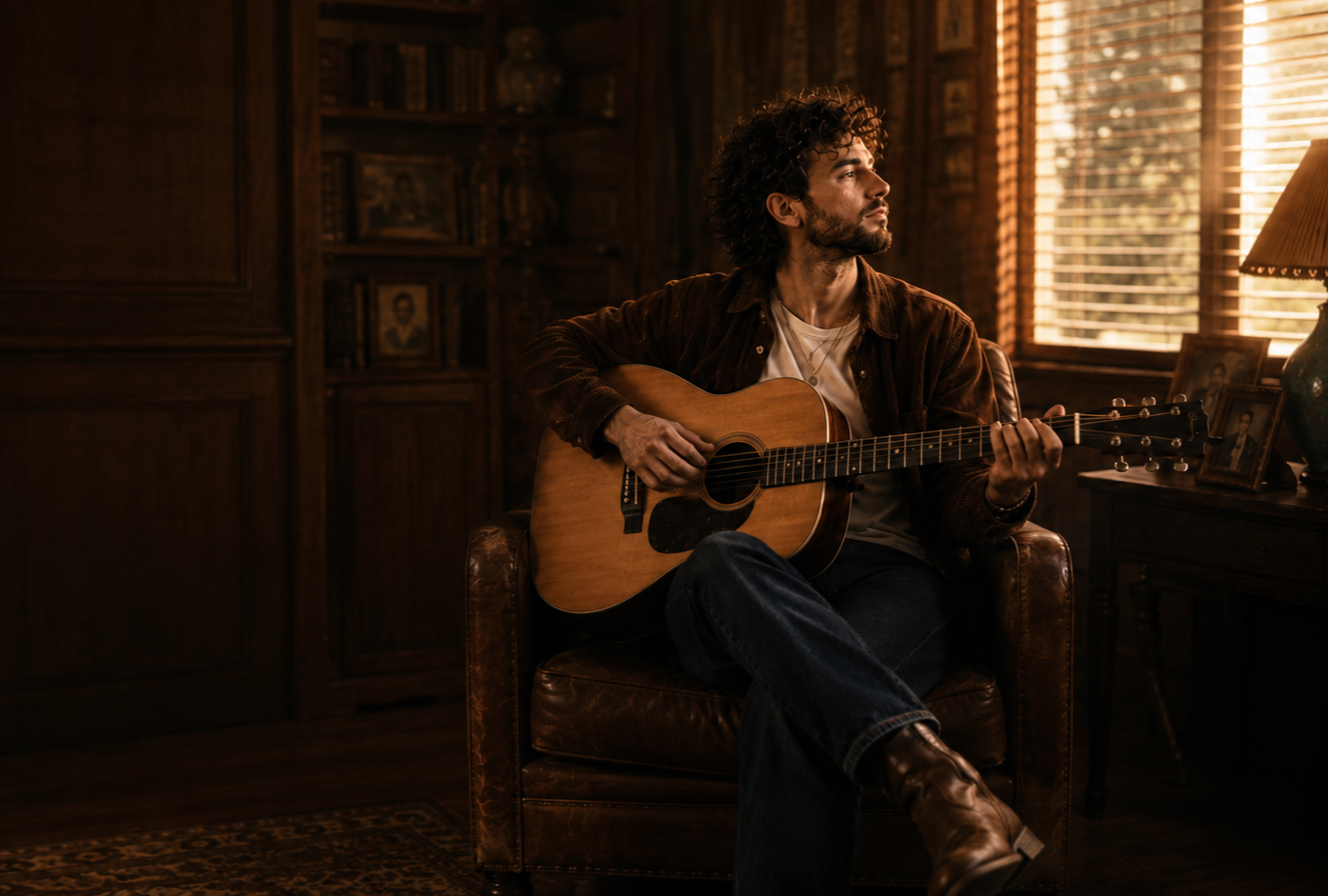
Those influences can be felt throughout Arden’s writing, but never in a way that overwhelms his own identity. His songs are filled with old rooms, long drives, family photographs, names that still carry weight, and places that continue to remember us after we have moved on. Rather than chasing grand declarations, Arden often finds meaning in the details people leave behind: a hallway light, a familiar road, handwriting on a page, or the silence between two people who once knew exactly what to say.

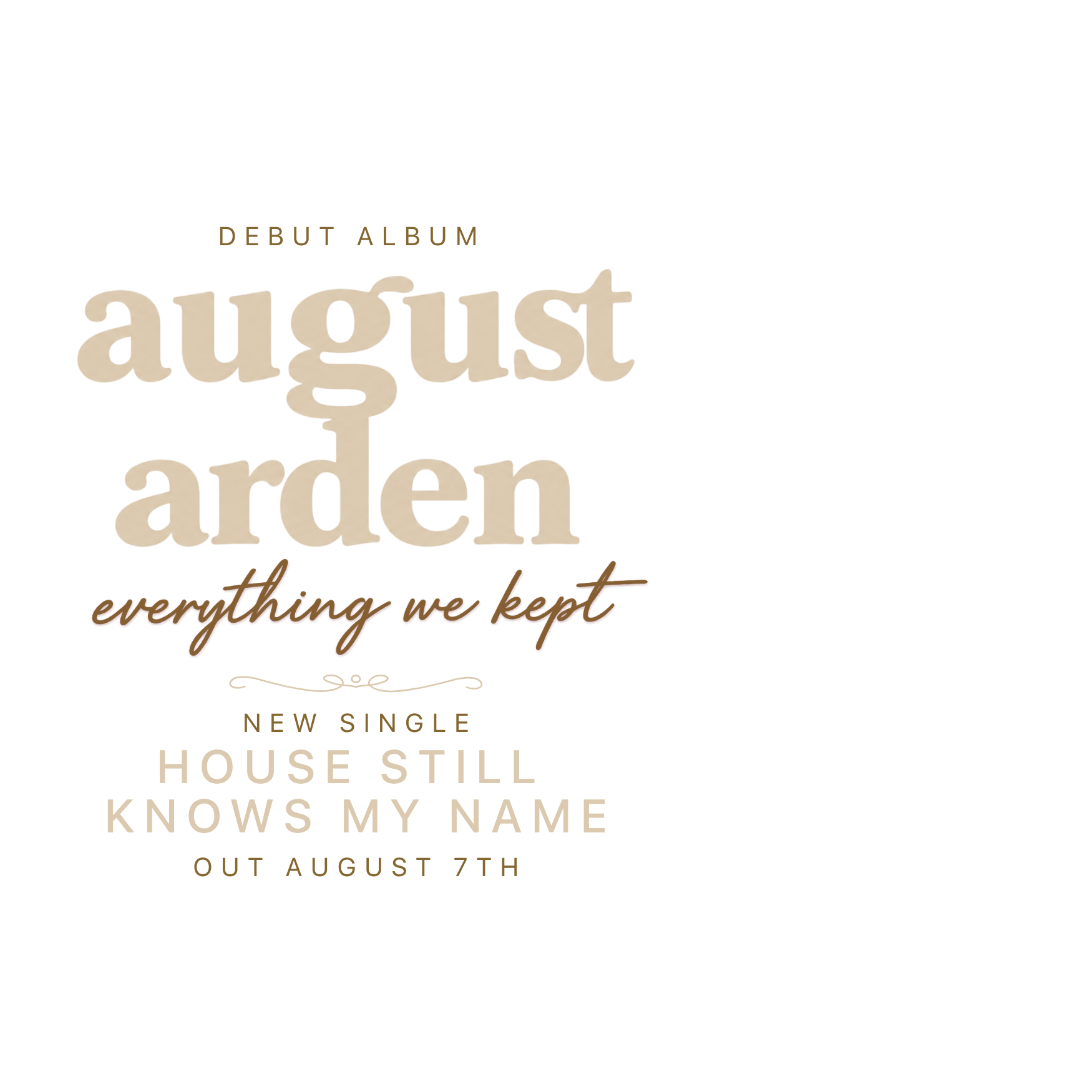
That sensibility comes into focus on his upcoming single, “House Still Knows My Name,” arriving August 7. The song serves as a striking introduction to Arden’s world, exploring the emotional gravity of returning to a place that remembers an earlier version of you. With its warm acoustic foundation, layered vocals, and quietly cinematic production, the track captures the strange comfort of being recognized by a space even after time has changed everything else.

“House Still Knows My Name” leads into Arden’s debut album, Everything We Kept, arriving August 28.

Across the album, Arden examines the people, places, and memories that remain with us—sometimes gently, sometimes painfully, but always honestly. The record moves through love, family, first heartbreak, distance, identity, and the quiet realization that growing older does not always mean leaving the past behind. Songs such as “September Again,” “The Night I Met You,” “Your Name in My Handwriting,” “Leave the Hallway Light On,” and the title track unfold like individual chapters in a larger emotional history.

At its core, Everything We Kept is an album about preservation—not of objects, but of feeling. It asks what survives after relationships change, homes are left behind, families grow apart, and younger versions of ourselves become increasingly difficult to recognize. Arden approaches those questions with restraint, allowing the writing, arrangements, and natural warmth of the performances to carry the emotional weight.

The result is a debut that feels unusually complete: intimate enough to sound like a private confession, yet expansive enough to belong to anyone who has ever missed a person, a place, or a version of life they could not hold onto.

With five albums already forming the foundation of his partnership with Next Era Media, August Arden is not entering music as a passing moment. He is building a catalog, a visual language, and an emotional universe designed to grow alongside his audience.

In an era often driven by immediacy, Arden is making music meant to linger.

Not simply songs to hear—but songs to keep.